
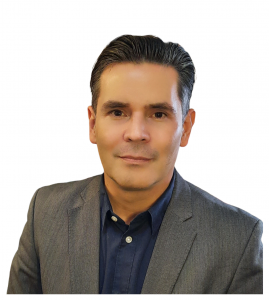
GIMÉNEZ CELANO, Diego Emanuel
Education
- Postdocoral Research, University of Coimbra (2018-2024).
- Postdoctoral Research, University of Londrina (2016-2018).
- PhD, Construction and Representation of Cultural Identities (Literature and Philosophy), University of Barcelona (2010-2014).
- MA, Construction and Representation of Cultural Identities (Literature and Philosophy), University of Barcelona (2008-2010).
- Bachelor in Philosophy, University of Barcelona (1999-2004).
Research Interests
- Portuguese Literature (葡萄牙文學).
- Modernism (現代主義).
- Materialities of Literature (文學物質性).
- Philosophy (哲學).
- Digital Humanities (數位人文).
- Text Encoding Initiative (文字編碼計劃).
- Digital Archives (數位檔案館).
- Assistant Professor, University of Macau (2026-present).
- Invited Assistant Professor, University of Coimbra (2025).
- Researcher, Centre for Portuguese Literature, University of Coimbra (2018-2024).
- Researcher, Universidade Estadual de Londrina (2016-2018).
- Researcher, Fundação Calouste Gulbenkian (2015).
- Researcher, Universidade de Coimbra (2012-2014).
- Journalist, La Vanguardia (Spain) (2011-2012).
- Professional Reader, Literary Agency IMC, Barcelona (2007-2012).
Pessoa, Fernando. 2025. Livro do Desassossego: antologia essencial. (Sel. e introd. Diego Giménez ; il. Marta Nunes ; pref. João Costa). 1ª ed. Lisboa: Shantarin. ISBN 978-989-915-641-8. https://www.shantarin.com/product/livro-do-desassossego-antologia-essencial
This anthology of the Book of Disquiet was selected for the Portuguese National Plan of Reading for 2027. It features a preface written by Pessoa himself and 49 representative fragments of the work, gathered under seven themes – “Modern Life”; “Daydreaming”; “The City”; “Sensation”; “Identity”; “The Work”; and “The Philosophy of Composition” – conceived together as a map for navigating the author’s poetic universe. The selected fragments provide an encounter with its essential passages and allow the reader to discover why this posthumous work has become one of Fernando Pessoa’s most important literary legacies of contemporary world literature.
Giménez, Diego. 2025. “O Livro do Desassossego, modos de leitura”. Terra Roxa E Outras Terras: Revista De Estudos Literários, 45(1), pp. 26–41. https://doi.org/10.5433/1678-2054.2025vol45n1p26
This article examines how the LdoD Archive enables new forms of engagement with the Book of Disquiet through its digital interface, highlighting how digital representation can transform the reading and interpretation of complex literary works. By analyzing the editorial and fragmentary nature of Pessoa’s text in a virtual environment, the study contributes to ongoing debates in digital literary studies and supports my broader research on the critical and theoretical implications of digital mediation in literary archives.
Giménez, Diego. 2024. “Fernando Pessoa em contexto digital: Apresentação”. Texto Digital. Universidad Federal de Santa Catarina. 20-2, pp.1-6. https://doi.org/10.5007/1807-9288.2024.e104140.
As guest editor, I organized the call, mediated between authors and editors, and wrote the introduction. Originating from the Pessoa 3.0 seminars (2023–2024), the issue explores digital archives, AI, and electronic literature, engaging 100 participants from six countries.
Giménez, Diego. 2023. “Repetição e plagiotropia, a presença da leitura na escrita”. ELyra: Revista Da Rede Internacional Lyracompoetics, (22), pp. 13–27. https://elyra.org/index.php/elyra/article/view/483.
This study examines the writing processes of Fernando Pessoa, Jorge Luis Borges, and Enrique Vila-Matas through the reading-writing relationship. Drawing on Haroldo de Campos’ plagiotropia (1997), Jerome McGann’s concept of textual variation (1991), and Manuel Portela’s view of intertextuality (2022), it explores how literary creation is shaped by reinterpretation and transformation.
Giménez, Diego; Gomide, Andressa. 2022. “Pesquisa Literária com R”. Revista Estudos do Século XX. Universidade de Coimbra. 22, pp.135-153. https://doi.org/10.14195/1647-8622_22_7.
This article presents a research methodology using the Quanteda package in R to analyze Fernando Pessoa’s work. Quanteda, designed for textual data analysis, supports natural language processing and visualization tools.
Portela, Manuel; Giménez, Diego. 2015. “The Fragmentary Kinetics of Writing in the Book of Disquiet”. Textual
Cultures. Society for Textual Scholarship. 9-2, pp.52-78. https://doi.org/10.14434/tc.v9i2.12752.
In this article we discuss the notion of literary fragment based on Fernando Pessoa’s Livro do Desassossego [Book
of Disquiet], an unfinished work written between 1913 and 1935. We address these notions of fragment in the
context of our current TEI-XML encoding of both Pessoa’s autograph materials and their editorial versions for
the LdoD Archive.
Text Encoding Initiative Consortium: https://tei-c.org/
European Association for Digital Humanities (EADH): https://eadh.org/
Centre for Portuguese Literature (University of Coimbra): https://www.uc.pt/fluc/clp/