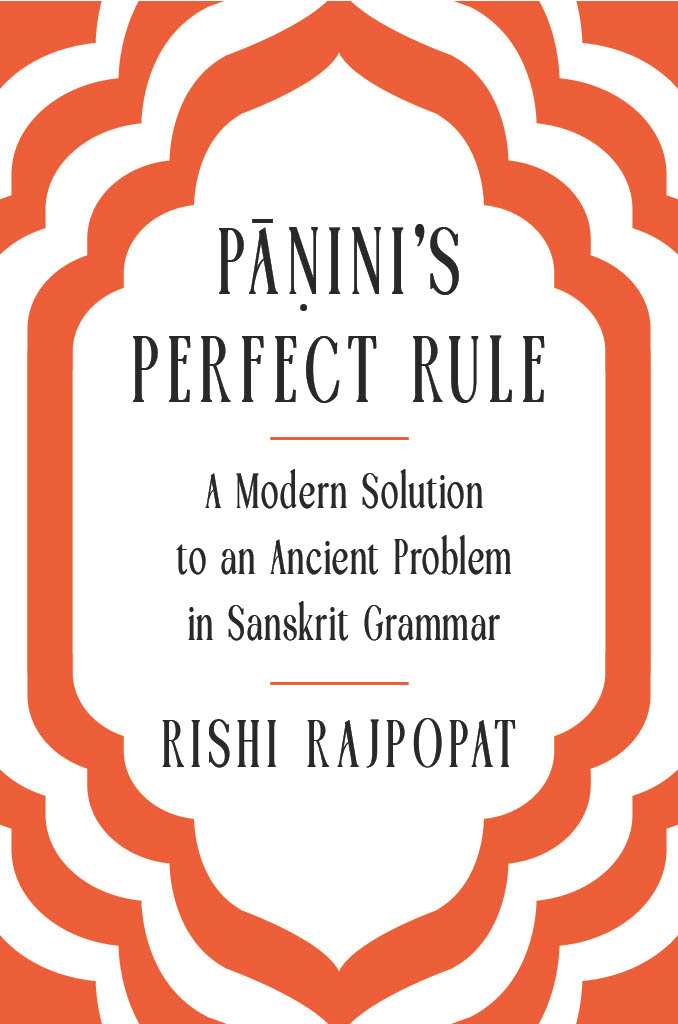
Rishi Rajpopat, a Research Assistant Professor in the Department of Philosophy and Religious Studies at the University of Macau, has published his first book titled ‘Panini’s Perfect Rule’ with Harvard University Press.
Rajpopat’s book builds on the discovery he made as a PhD student at the University of Cambridge. Rajpopat has solved a 2500-year-old problem by discovering the algorithm that runs a unique grammatical machine constructed by Panini circa 500 BC in North-West India. With the help of this algorithm, it has finally become possible for Panini’s grammar to be taught to the computer as one integrated system—without making any subjective interventions whatsoever.
This constitutes a major breakthrough in the field of computational linguistics and has generated tremendous interest among linguists, scientists, and historians alike.
Rajpopat’s book has received generous praise from multiple scholars including Nobel Laureate Amarya Sen who has called it a ‘a wonderfully interesting, enjoyable book’. Prof Tiziana Pontillo of the University of Cagliari writes: ‘This book resolves a major dilemma in the long history of the reception of Pāṇini’s grammar…Rajpopat’s ingenious and revolutionary reinterpretation of the metarule emanates from an accurate and elegant analysis…’.
Harvard theologian Prof Francis Clooney has commended the book for its ‘understated boldness’ and remarked: ‘Pāṇini’s Perfect Rule is a splendid book…Not only grammarians but also scholars in a wider range of Indian intellectual systems will benefit greatly from this magisterial demonstration of how best to reappropriate the great sūtra texts of the tradition’.
Rajpopat joined the University of Macau in 2025. This academic year, he is teaching two courses namely ‘Buddhist Philosophy’ and ‘Asian Values and Moral Traditions’ and conducting research on topics in the digital humanities, algorithms, early Yoga and Buddhism, Yogacara philosophy, and Vedic studies.