
Calendar of Events
M Mon
T Tue
W Wed
T Thu
F Fri
S Sat
S Sun
4 events,
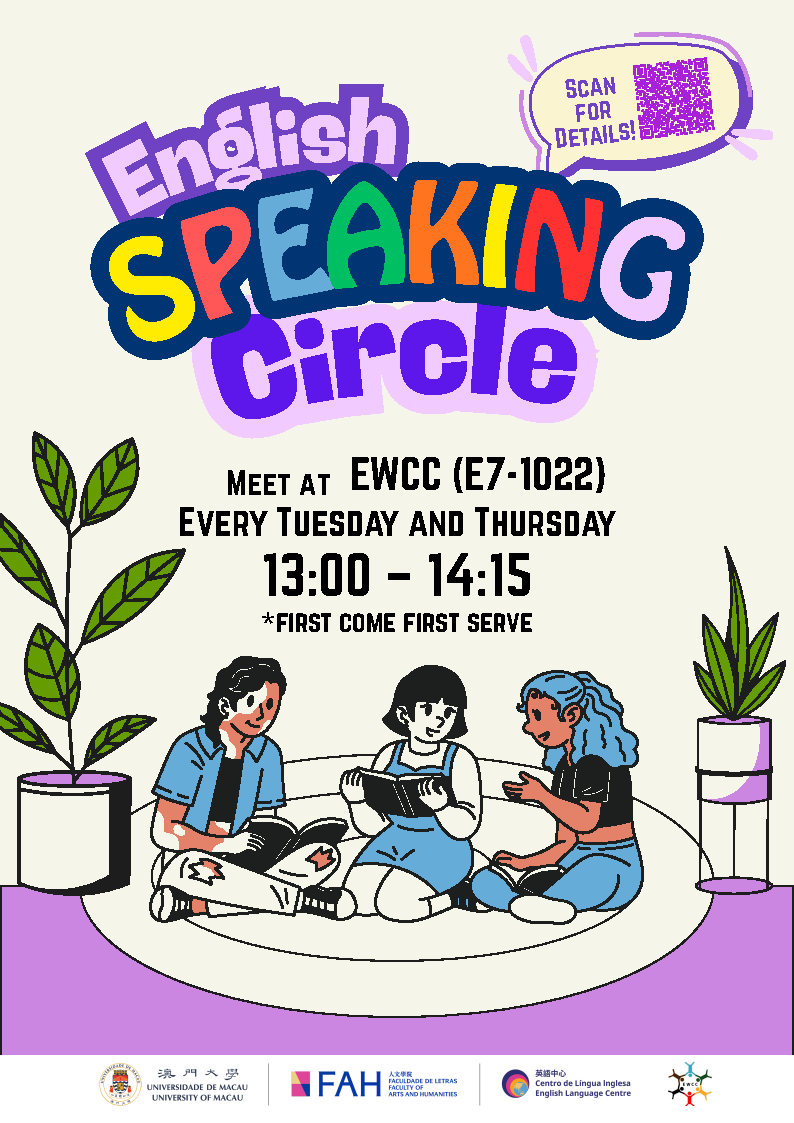
ELC-EWCC: EWCC English Speaking Circle
Dear students, Looking for a relaxed and friendly space to practice your English speaking skills? Join us for the English Writing and Communication Centre (EWCC) English Speaking Circle! This speaking circle is designed to help you build confidence, improve fluency, and enjoy meaningful conversations in English—no pressure, no judgment, just practice and fun. Location: E7-1022 Dates: January 13 – February 5 (Every Tuesday & Thursday) Time: 1:00PM- 2:15PM ▷ Seats are limited to 10 participants , first-come, first-served. Come for the English practice and great conversations! We look forward to speaking with you! For any enquiries, contact us at fah_elc_ells@um.edu.mo. Warm wishes, English Writing and Communication Centre (EWCC) English Language Centre Faculty of Arts and Humanities

7 events,
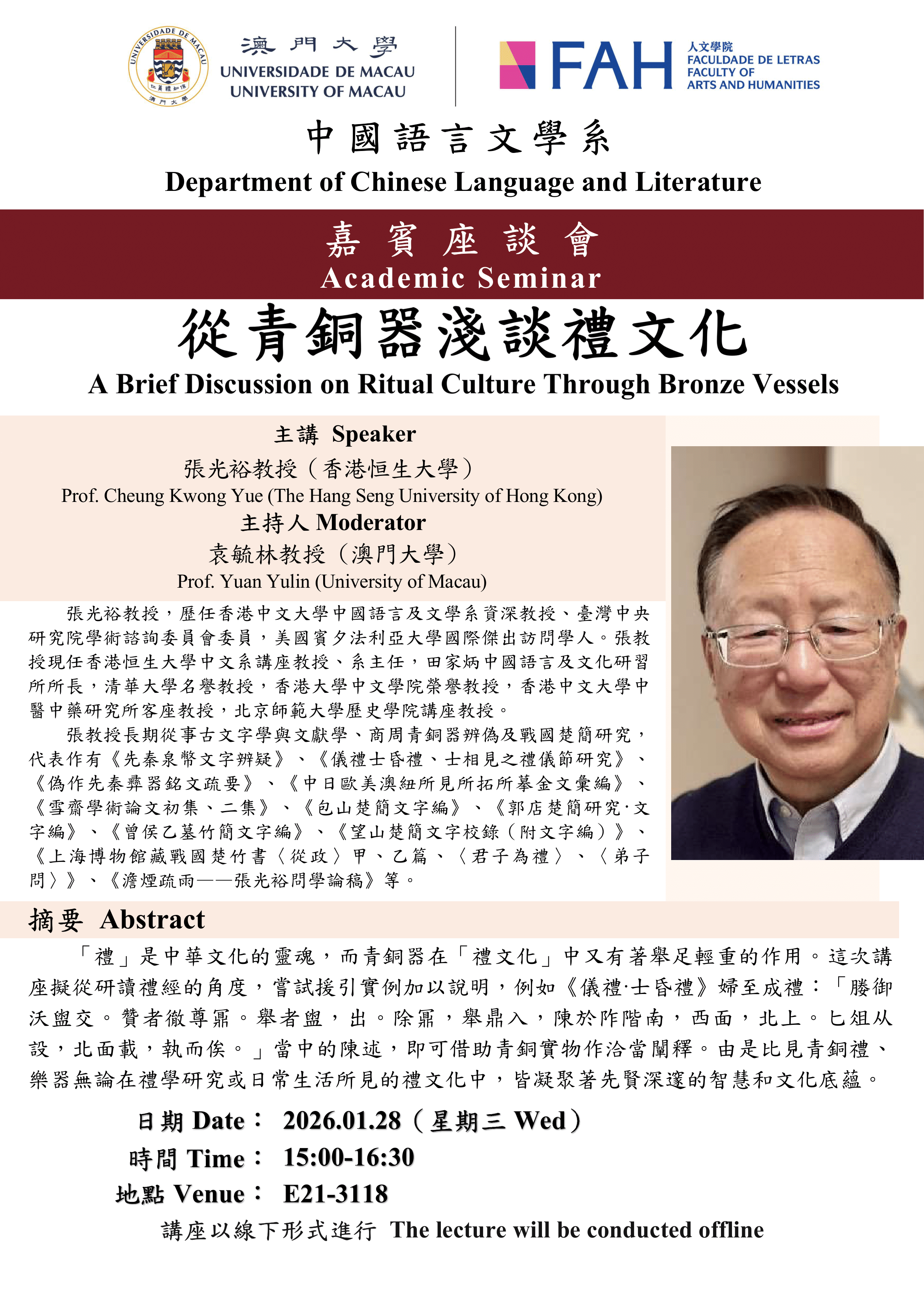
FAH/DPHIL Lecture Series – “Crossing Rivers, Crossing Minds: How Yu Became “Metaphor/Analogy” in Early China” by Prof. Zhou Boqun, The University of Hong Kong, Hong Kong
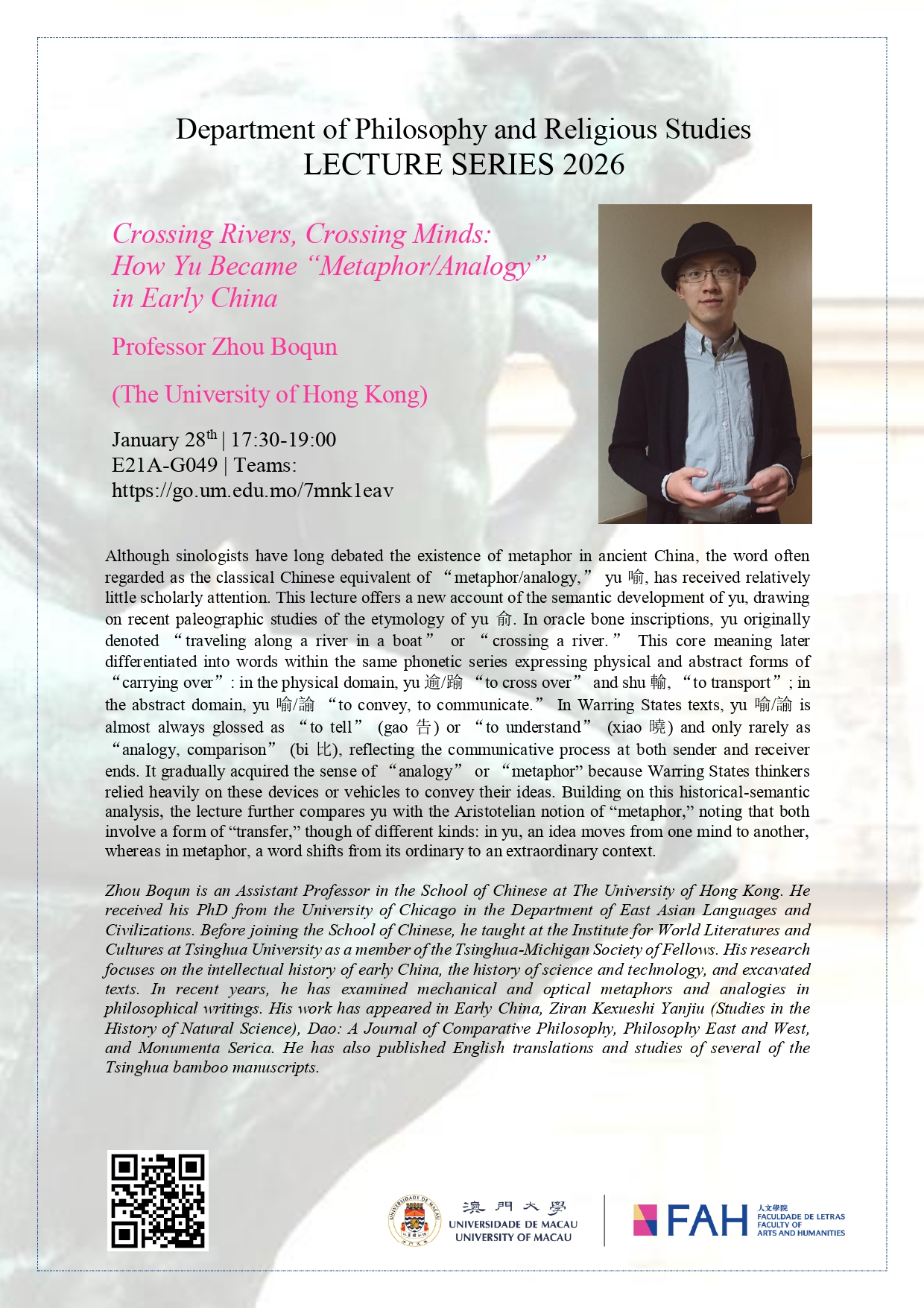
FAH/DPHIL Lecture Series – “Crossing Rivers, Crossing Minds: How Yu Became “Metaphor/Analogy” in Early China” by Prof. Zhou Boqun, The University of Hong Kong, Hong Kong
Microsoft Teams: https://go.um.edu.mo/7mnk1eav Abstract Although sinologists have long debated the existence of metaphor in ancient China, the word often regarded as the classical Chinese equivalent of “metaphor/analogy,” yu 喻, has received relatively little scholarly attention. This lecture offers a new account of the semantic development of yu, drawing on recent paleographic studies of the etymology of yu 俞. In oracle bone inscriptions, yu originally denoted “traveling along a river in a boat” or “crossing a river.” This core meaning later differentiated into words within the same phonetic series expressing physical and abstract forms of “carrying over”: in the physical domain, yu 逾/踰 “to cross over” and shu 輸, “to transport”; in the abstract domain, yu 喻/諭 “to convey, to […]
FAH – DENG Guest Lecture: “Exploring AI-Enhanced Translation in Book Translation”
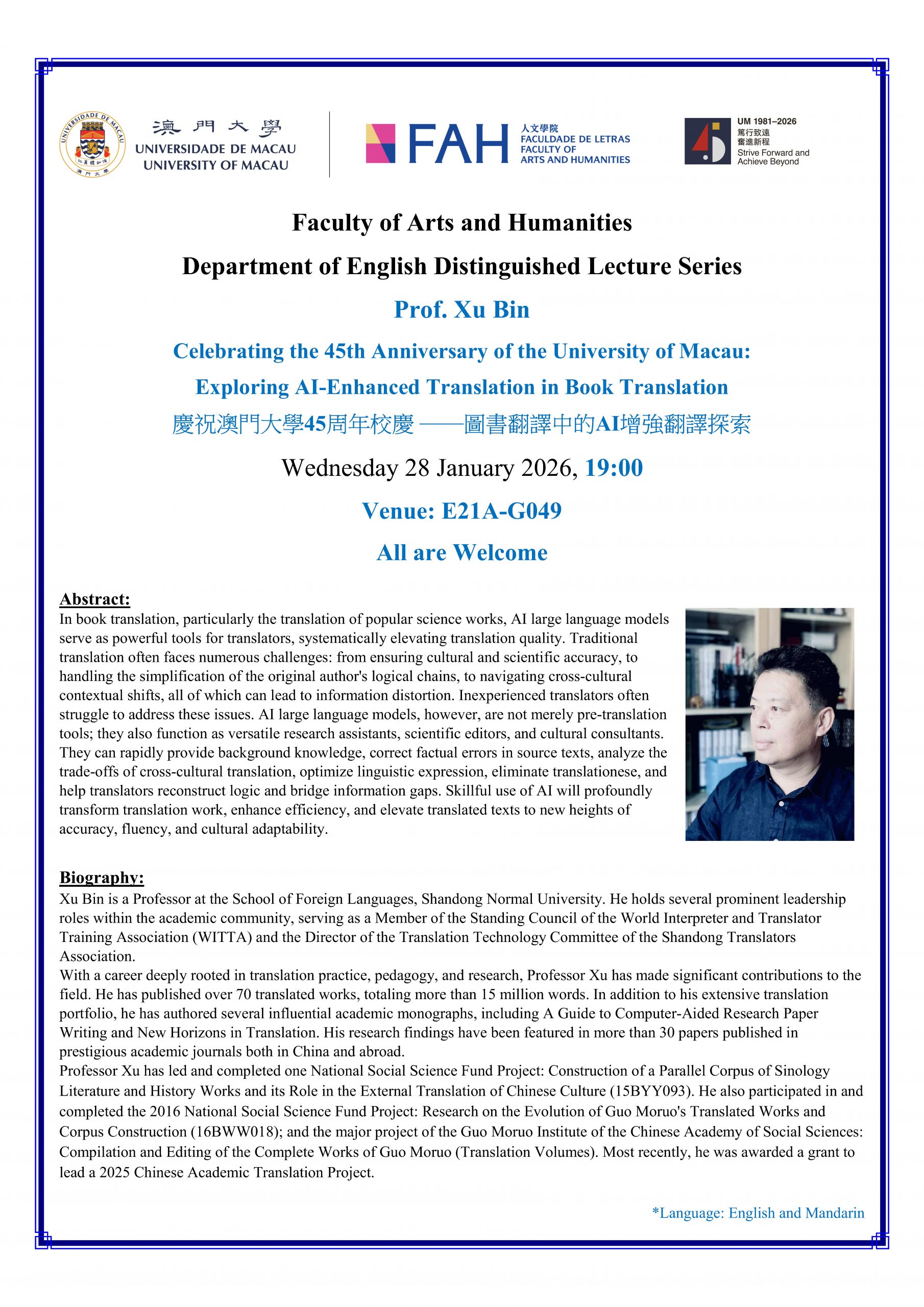
FAH – DENG Guest Lecture: “Exploring AI-Enhanced Translation in Book Translation”
Abstract: In book translation, particularly the translation of popular science works, AI large language models serve as powerful tools for translators, systematically elevating translation quality. Traditional translation often faces numerous challenges: from ensuring cultural and scientific accuracy, to handling the simplification of the original author's logical chains, to navigating cross-cultural contextual shifts, all of which can lead to information distortion. Inexperienced translators often struggle to address these issues. AI large language models, however, are not merely pre-translation tools; they also function as versatile research assistants, scientific editors, and cultural consultants. They can rapidly provide background knowledge, correct factual errors in source texts, analyze the trade-offs of cross-cultural translation, optimize linguistic expression, eliminate translationese, and help translators reconstruct logic and bridge […]
5 events,
FAH-DENG Guest Lecture: “From AIPE to AIAT: Translation in the Age of Artificial Intelligence”
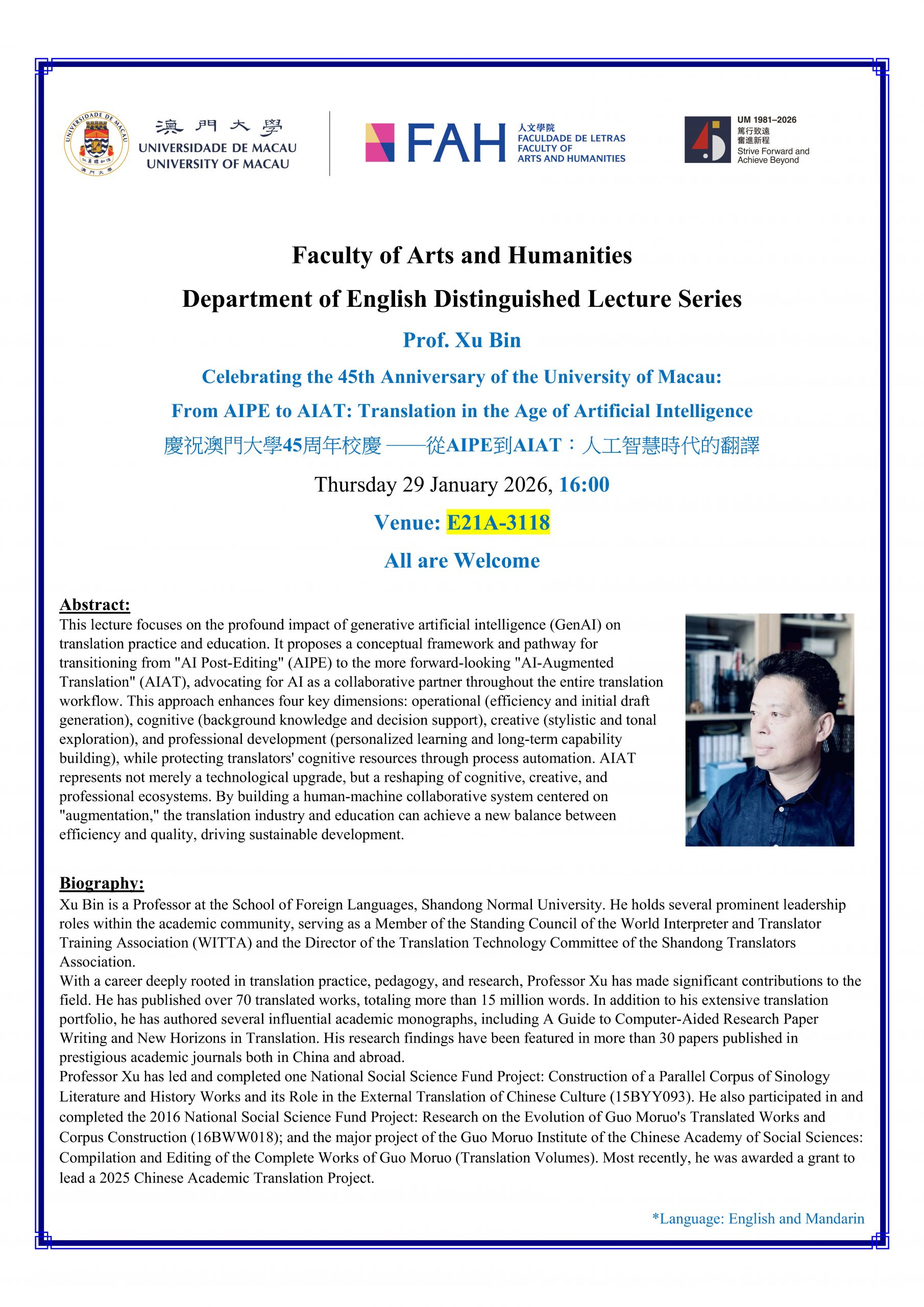
FAH-DENG Guest Lecture: “From AIPE to AIAT: Translation in the Age of Artificial Intelligence”
Abstract: This lecture focuses on the profound impact of generative artificial intelligence (GenAI) on translation practice and education. It proposes a conceptual framework and pathway for transitioning from "AI Post-Editing" (AIPE) to the more forward-looking "AI-Augmented Translation" (AIAT), advocating for AI as a collaborative partner throughout the entire translation workflow. This approach enhances four key dimensions: operational (efficiency and initial draft generation), cognitive (background knowledge and decision support), creative (stylistic and tonal exploration), and professional development (personalized learning and long-term capability building), while protecting translators' cognitive resources through process automation. AIAT represents not merely a technological upgrade, but a reshaping of cognitive, creative, and professional ecosystems. By building a human-machine collaborative system centered on "augmentation," the translation industry and education […]
6 events,
ELC- ECAC: “Think Clearly with Critical Thinking” Workshop
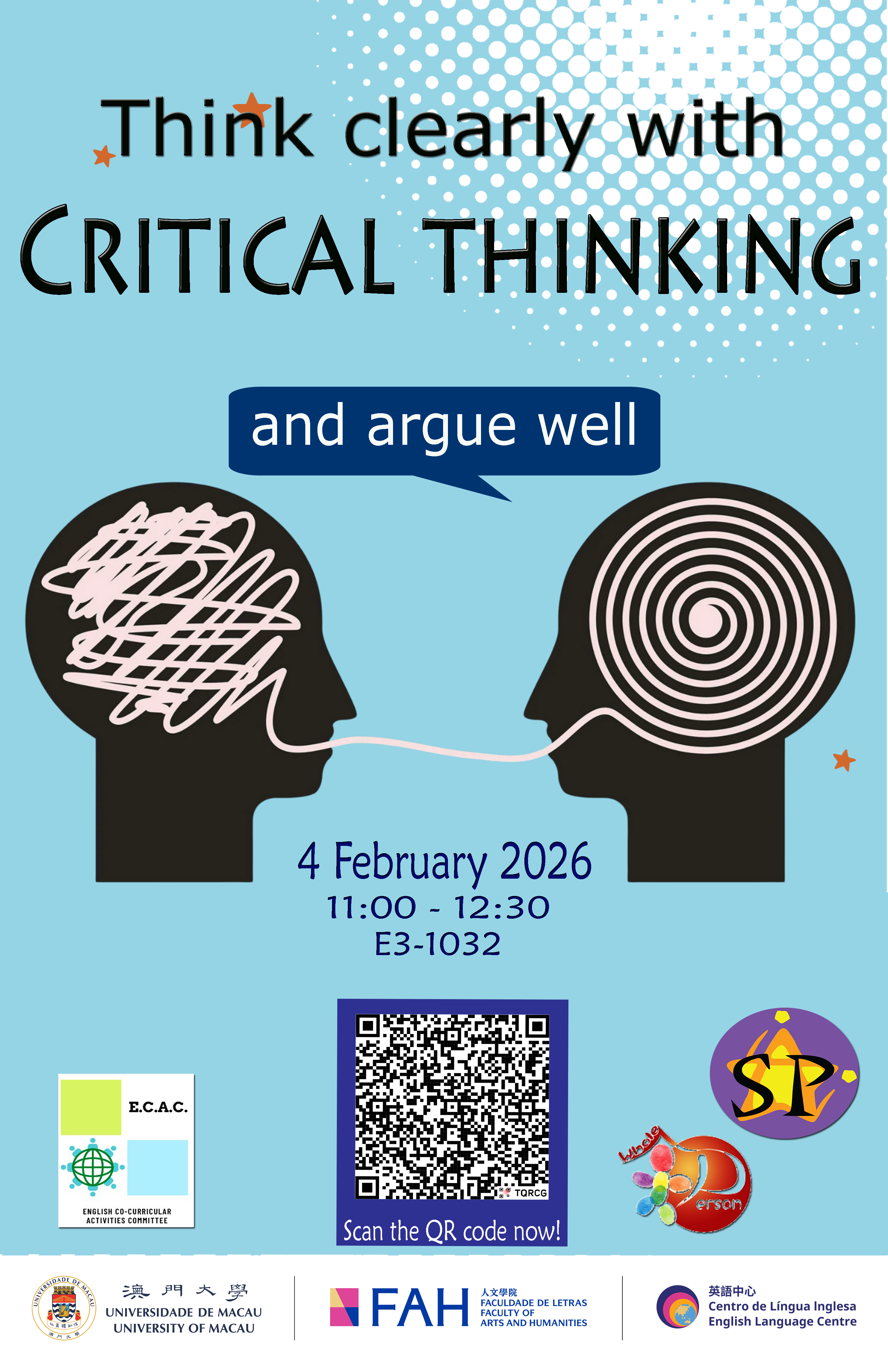
ELC- ECAC: “Think Clearly with Critical Thinking” Workshop
In today’s fast‑paced academic and professional environments, the ability to think clearly, question effectively, and build strong arguments is more essential than ever. This workshop invites students to sharpen their reasoning skills by exploring practical, accessible strategies for critical thinking. Together, we will break down what it means to think logically, examine how strong arguments are constructed, and practice tools that help transform ideas into coherent, persuasive claims. Through interactive discussions and hands-on activities, participants will explore key characteristics of critical thinking, learn how to link ideas in meaningful ways, and work collaboratively to analyze and present well‑structured arguments. Whether you’re preparing for academic writing, group projects, or real‑world communication, this workshop offers concrete techniques you can apply immediately. By the […]
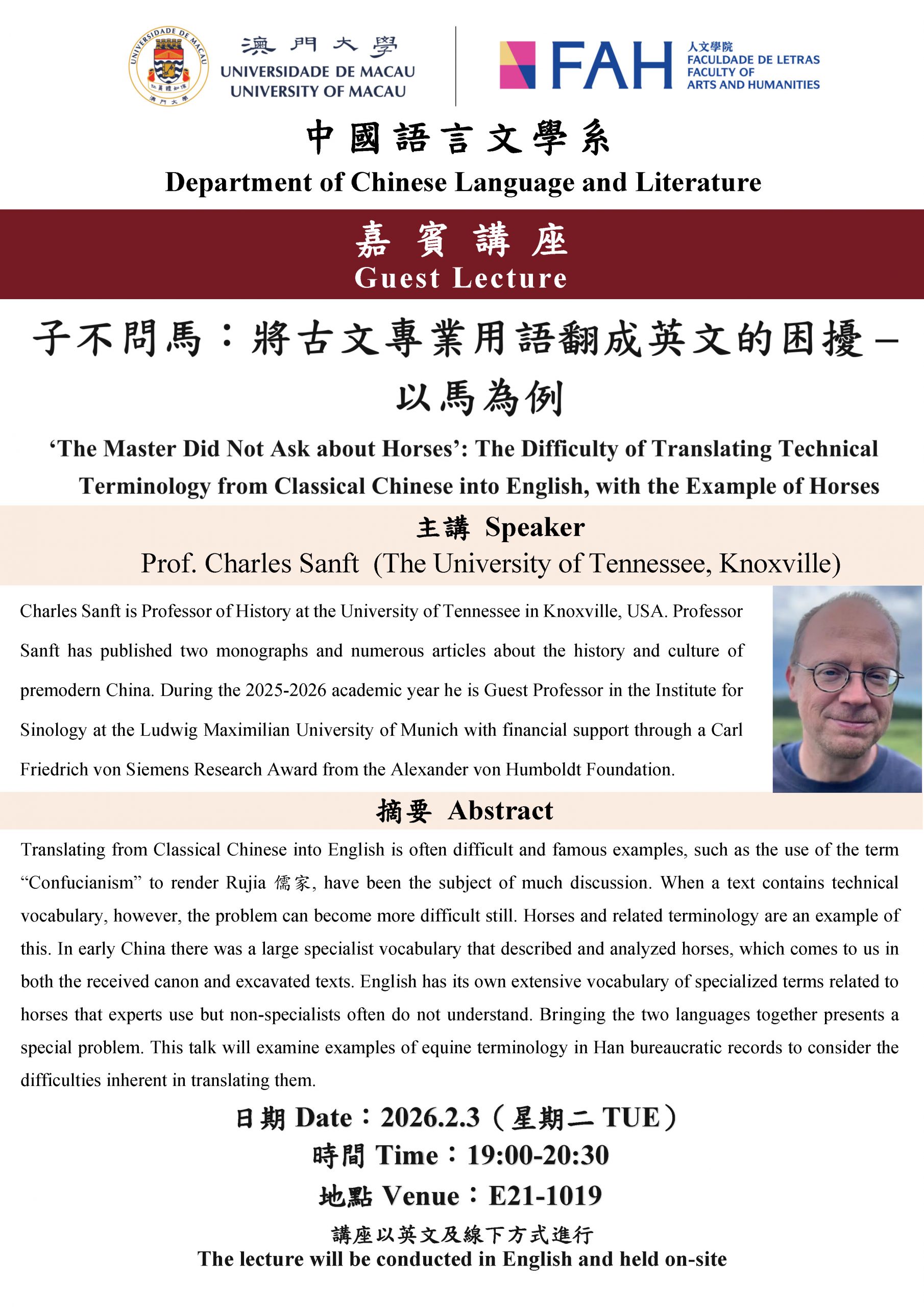
【Macao Humanities Forum】Land of Marvels: Twenty Poems about Dunhuang by Prof. Charles Sanft from University of Tennessee (1 Smart Point and 15 CS)
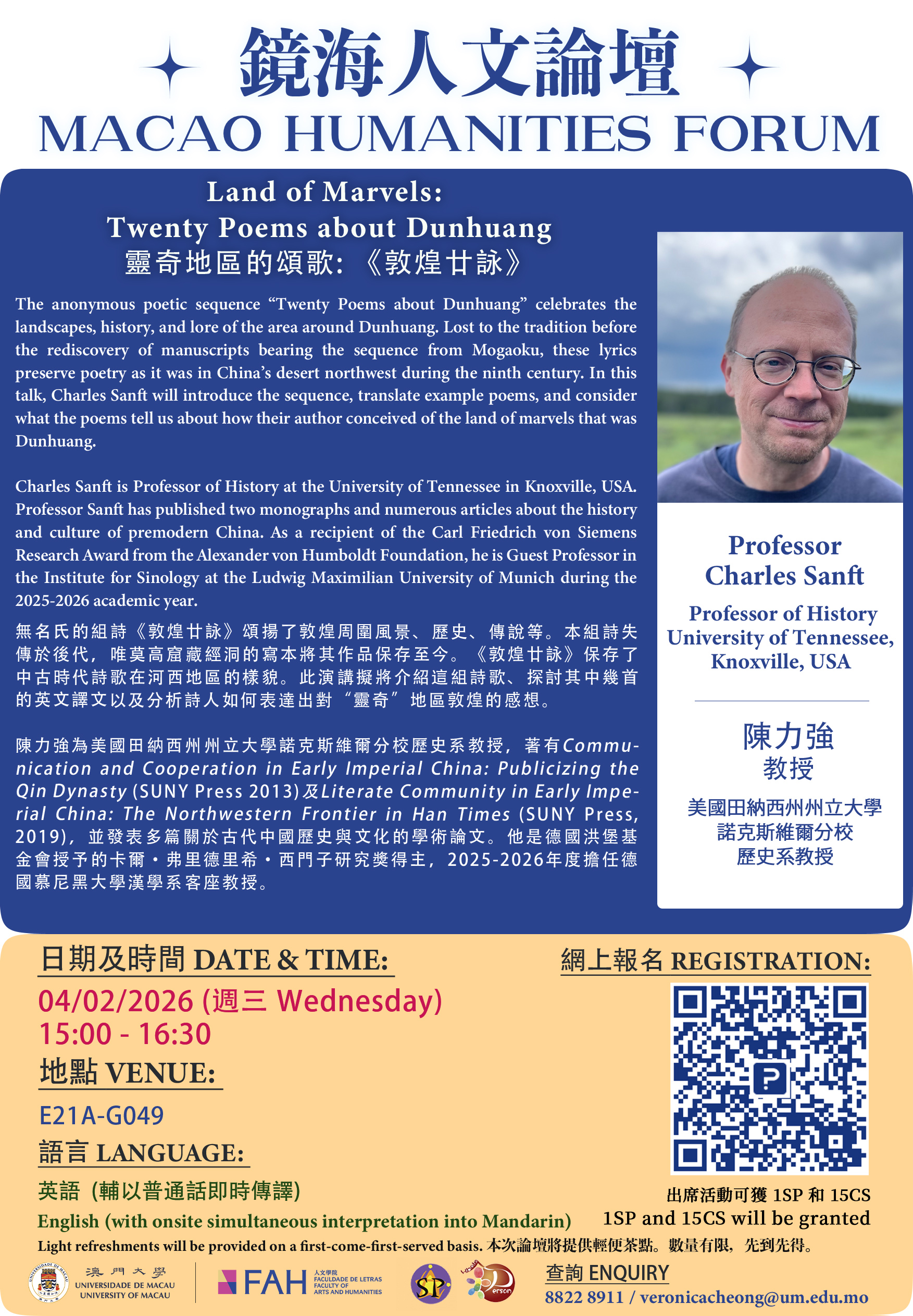
【Macao Humanities Forum】Land of Marvels: Twenty Poems about Dunhuang by Prof. Charles Sanft from University of Tennessee (1 Smart Point and 15 CS)
We are delighted to invite you to the 3rd Lecture of the FAH Macao Humanities Forum (2025/2026) scheduled on 4 February 2026. The forum provides a platform for world-renowned scholars from diverse humanities fields to share their academic and research outcomes with FAH community and other UM scholars. All members of UM community are cordially invited to this splendid event. In the upcoming forum, we are honored to have Professor Charles Sanft as our guest speaker to deliver a lecture on “Land of Marvels: Twenty Poems about Dunhuang”. Professor Sanft is Professor of History at the University of Tennessee in Knoxville, USA. Professor Sanft has published two monographs and numerous articles about the history and culture of premodern China. As a […]
FAH/DPHIL Work-in-progress Seminar – “How to read Mafalda: An example of philosophical humor in Latin American comic strips” by Mr. Arqueles Estrada Cartagena
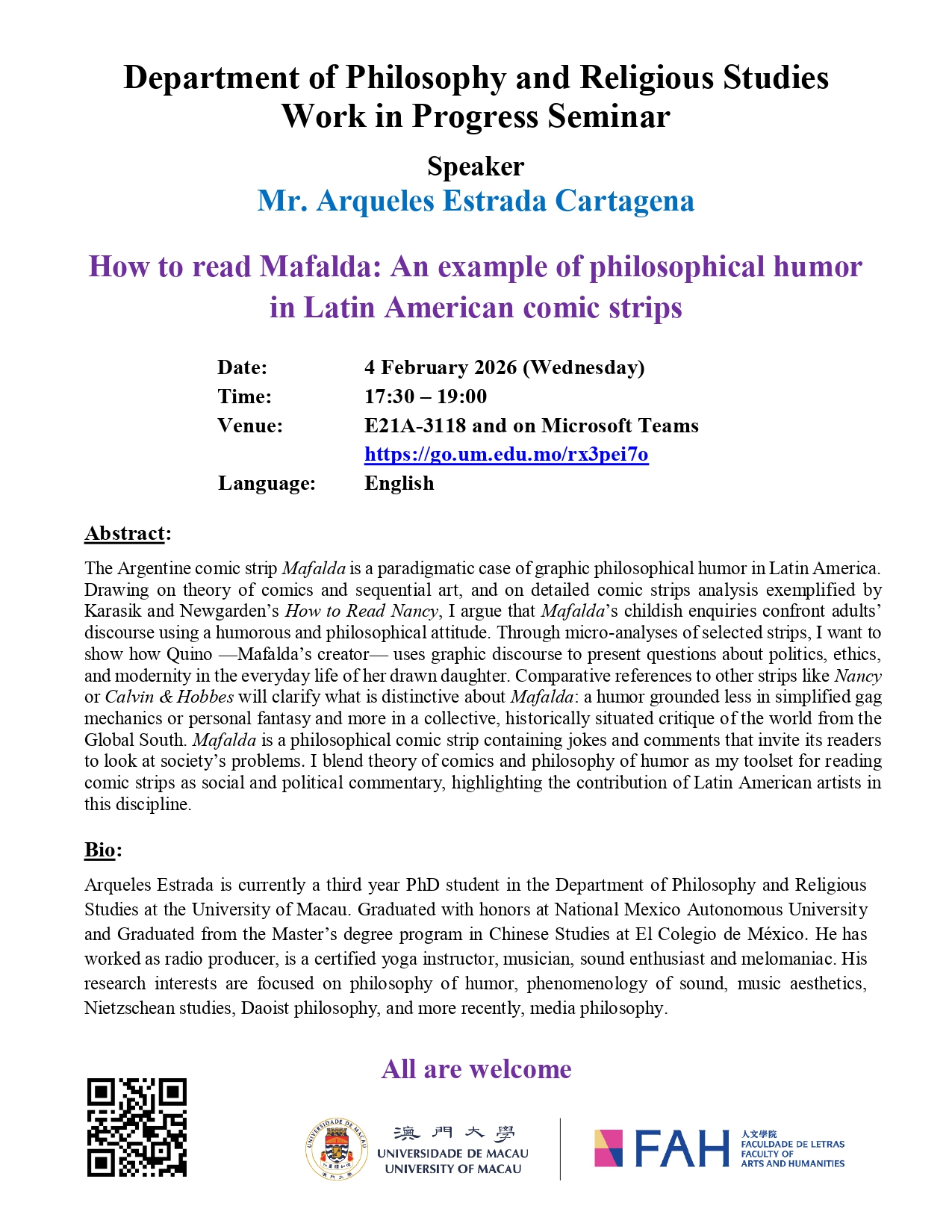
FAH/DPHIL Work-in-progress Seminar – “How to read Mafalda: An example of philosophical humor in Latin American comic strips” by Mr. Arqueles Estrada Cartagena
Microsoft Teams: https://go.um.edu.mo/rx3pei7o Abstract The Argentine comic strip Mafalda is a paradigmatic case of graphic philosophical humor in Latin America. Drawing on theory of comics and sequential art, and on detailed comic strips analysis exemplified by Karasik and Newgarden’s How to Read Nancy, I argue that Mafalda’s childish enquiries confront adults’ discourse using a humorous and philosophical attitude. Through micro-analyses of selected strips, I want to show how Quino —Mafalda’s creator— uses graphic discourse to present questions about politics, ethics, and modernity in the everyday life of her drawn daughter. Comparative references to other strips like Nancy or Calvin & Hobbes will clarify what is distinctive about Mafalda: a humor grounded less in simplified gag mechanics or personal fantasy […]
5 events,

ELC Spring 2026 i-Learner English for Universities Marathon Competition
The ELC is pleased to launch the i-Learner English Marathon Competition again this semester. While the competition began before the break, you can still participate and complete as many lessons as possible by 11 April 2026 for a chance to win exciting prizes. To join the contest, students have to complete a minimum requirement of lessons with a score of 70% or above. Students from UE1 to UE3 must complete a minimum of 35 lessons, while students from E4 to E5 must complete at least 20 lessons to enter the competition. The ELC will select one champion who achieves the highest completion regardless of the level. The top students at each level who have completed the most will also be […]
FAH/DPHIL Lecture Series – “Don’t Say Farewell to the Modal Theory of Luck ” by Prof. Jesse Hill, Lingnan University, Hong Kong
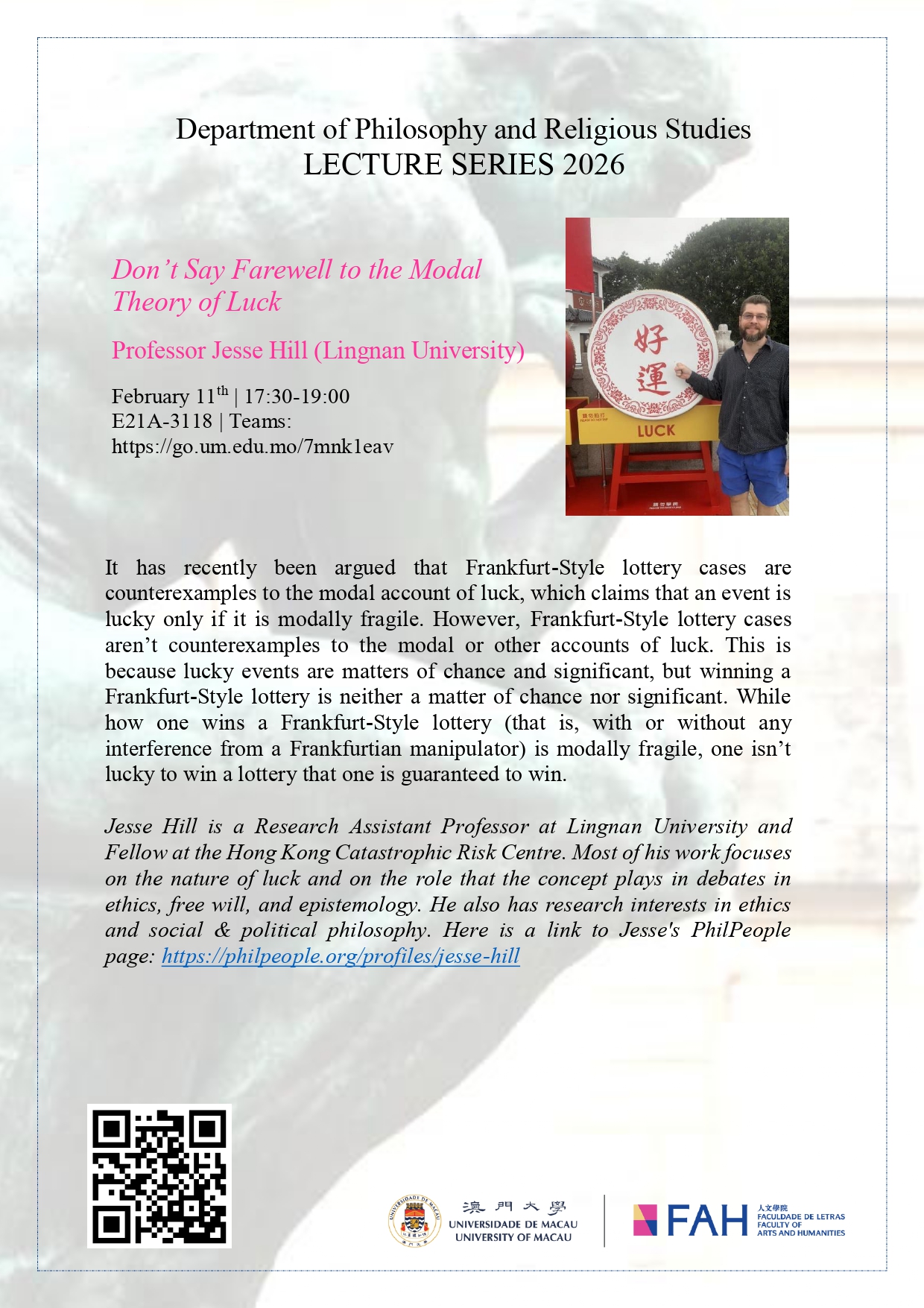
FAH/DPHIL Lecture Series – “Don’t Say Farewell to the Modal Theory of Luck ” by Prof. Jesse Hill, Lingnan University, Hong Kong
Microsoft Teams: https://go.um.edu.mo/7mnk1eav Abstract It has recently been argued that Frankfurt-Style lottery cases are counterexamples to the modal account of luck, which claims that an event is lucky only if it is modally fragile. However, Frankfurt-Style lottery cases aren’t counterexamples to the modal or other accounts of luck. This is because lucky events are matters of chance and significant, but winning a Frankfurt-Style lottery is neither a matter of chance nor significant. While how one wins a Frankfurt-Style lottery (that is, with or without any interference from a Frankfurtian manipulator) is modally fragile, one isn’t lucky to win a lottery that one is guaranteed to win. Bio Jesse Hill is a Research Assistant Professor at Lingnan University and […]