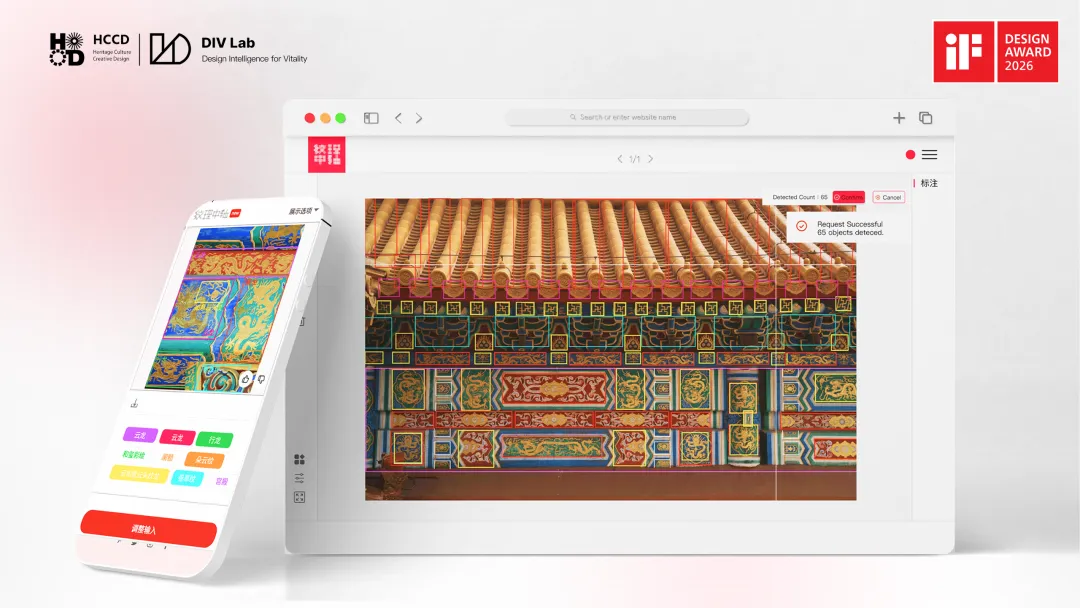

The results of the 2026 iF DESIGN AWARD in Germany have been officially announced. The “Texture Axis” AI-empowered educational platform project, designed by the team of Professor Ren Xipei from the Faculty of Arts and Humanities at the University of Macau, has won the iF Design Award with a high score of 320.
The project responds to issues such as the threshold for model usage, the organisation of cultural data, and interdisciplinary collaboration in real teaching and industrial scenarios, demonstrating the University of Macau’s forward-looking exploration and practical capabilities in digital and intelligent design education.
Founded in 1954, the iF Design Award is known as the “Oscars of the design world.” This year’s awards were evaluated by an independent jury composed of 129 international experts in design and sustainability, who assessed and selected winners from more than ten thousand entries through a rigorous and transparent process. The recognition of Texture Axis within the context of artificial intelligence reflects the international community’s high recognition of its innovative educational approach, platform-based system thinking, and interdisciplinary collaborative achievements.
- Texture Axis website: http://www.textureaxis.com/
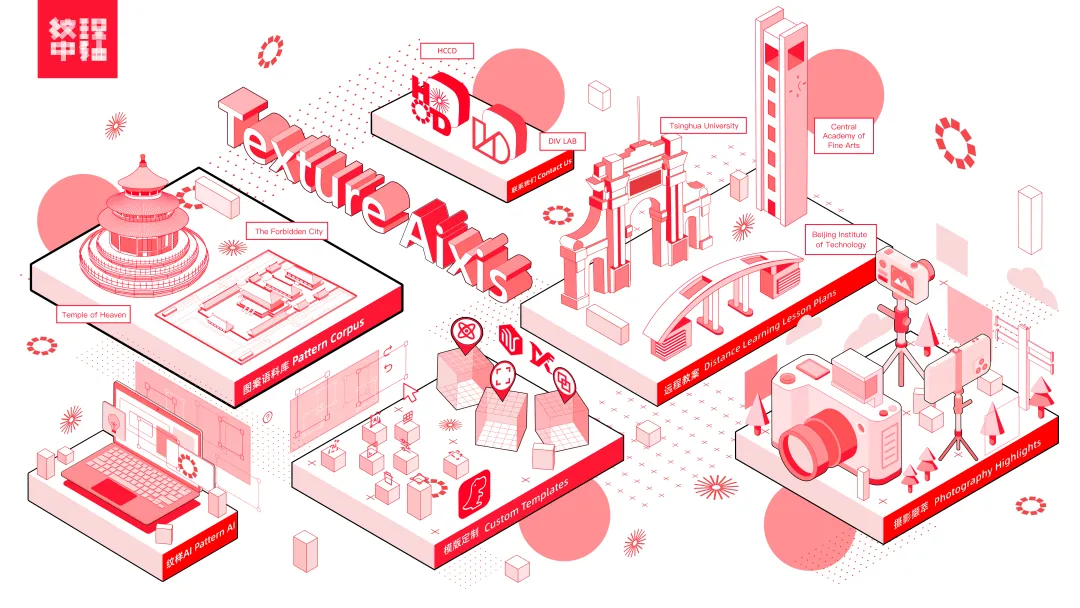
The Texture Axis platform takes the regional patterns of the UNESCO World Heritage “Beijing Central Axis” as its cultural core. It builds an AI educational platform integrating computer vision model creation, custom labelling, model generation, and pattern data sharing, responding to the needs of the era in which AI capabilities enter classrooms, methodologies, and creative processes. The platform adopts a lightweight architecture and traditional Chinese red as its primary visual element, enhancing cultural identity and readability for teaching.
The website is structured around four core functional modules: pattern corpus, template customisation, remote teaching plans, and photography collection. Through functions such as intuitive small-sample uploads, intelligent annotation, and one-click training and testing, the platform lowers the threshold for model training, enabling teachers and students to transform the “algorithm black box” into a design process that can be demonstrated, discussed, and iterated.
The platform supports educators and students in sharing models and data results, promoting collaborative innovation among design, technology, and cultural research. With the support of visual models such as Grounding DINO, AI can rapidly match a database of more than 100,000 entries and generate analytical and style tags, promoting the closed-loop generation of “cultural data – model capability – design expression.” The platform brings together pattern resources related to multiple World Heritage sites along the Beijing Central Axis, including the Forbidden City and the Temple of Heaven, providing three forms of representation: photographic images, coloured illustrations, and line drawings. The open-source images were photographed and illustrated by students from the Central Academy of Fine Arts, enabling the rediscovery and reproduction of cultural resources through learning and creative practice. Supported by cloud management and collaborative creation mechanisms, the platform will in the future enable one-click export and sharing of results, connecting cultural heritage with design application scenarios. The mobile version will further explore scenario-based photo pattern recognition and real-time optimisation, while encouraging users to participate in tag supplementation and style evaluation, promoting the contemporary expression and global dissemination of traditional Chinese patterns.
Texture Axis was initiated by the team of Professor Ren Xipei at the University of Macau together with the HCCD team of the Central Academy of Fine Arts, with visual AI technical support provided by the DINO-X team of Vision Inspire Future. Guided by the question of how cultural data can be organised, trained, shared, and integrated into teaching, the project has formed an interdisciplinary collaboration path integrating design, humanities, and engineering.
The platform has been applied in teaching in the Doctor of Design (DDES) in Visual Communication Design at the University of Macau, the undergraduate programme at the School of Design of the Central Academy of Fine Arts, and the undergraduate programme in Intelligent Innovation Design at Beijing Institute of Technology. Teachers and students have completed the development and training of more than one hundred pattern recognition models. The project will continue to empower the revitalisation and innovation of traditional patterns through artificial intelligence, serving teaching, design, and related industries in cultural derivative practices. With confidence in national culture and technological self-reliance, it aims to cultivate future-oriented interdisciplinary design talents in the AI era.