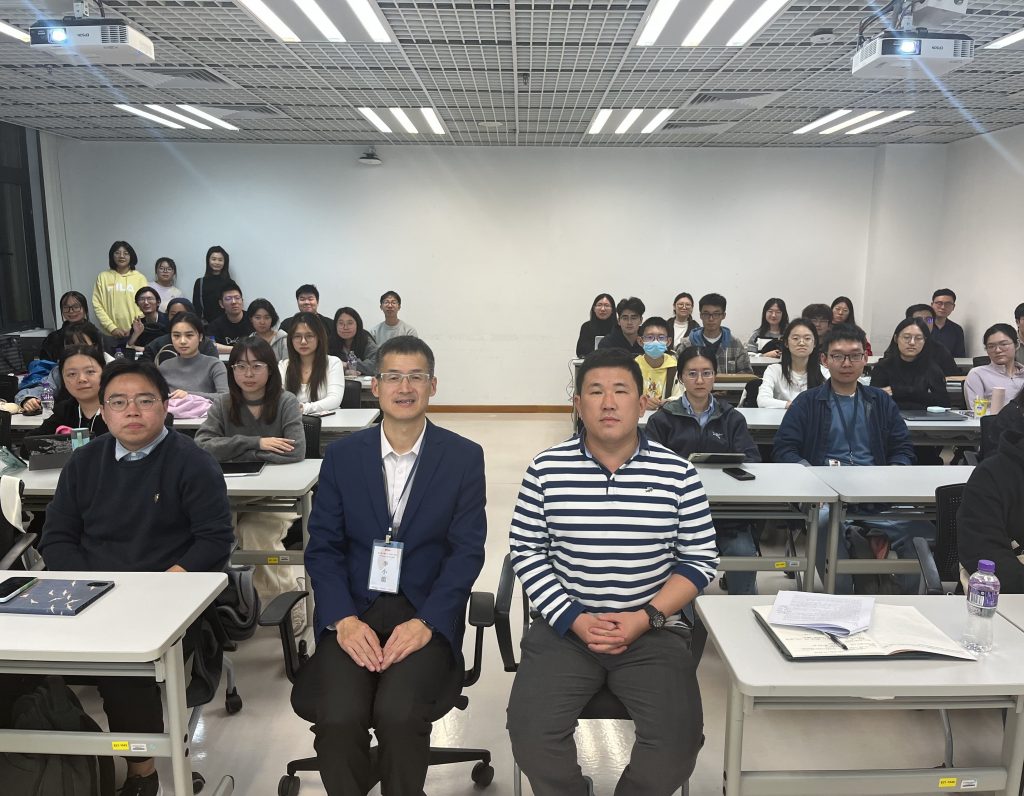
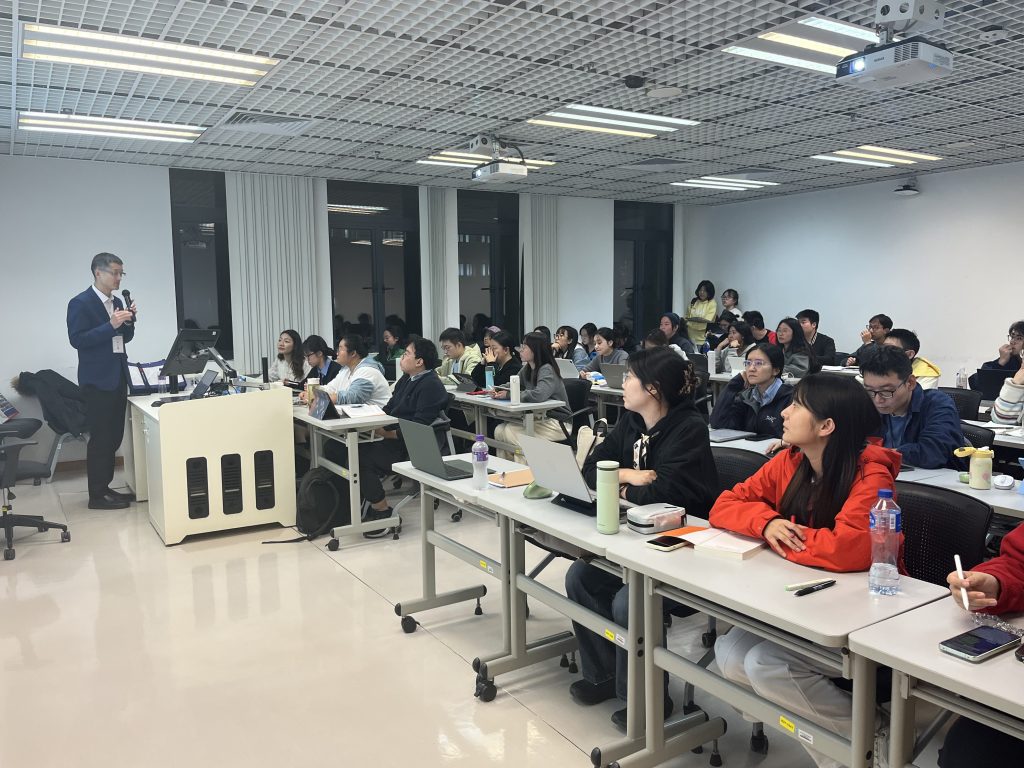
On November 19, 2025, the Department of Chinese Language and Literature of the Faculty of Arts and Humanities at the University of Macau hosted an academic lecture entitled “The Naming Strategies and Narrative Construction in Yandanzi,” featuring Professor Li Xiaolong from the School of Chinese Language and Literature at Beijing Normal University. The event was chaired by Professor Zhang Yue of the University of Macau, and attracted a large number of faculty members and students from both within and outside the university, creating a vibrant and engaging atmosphere.
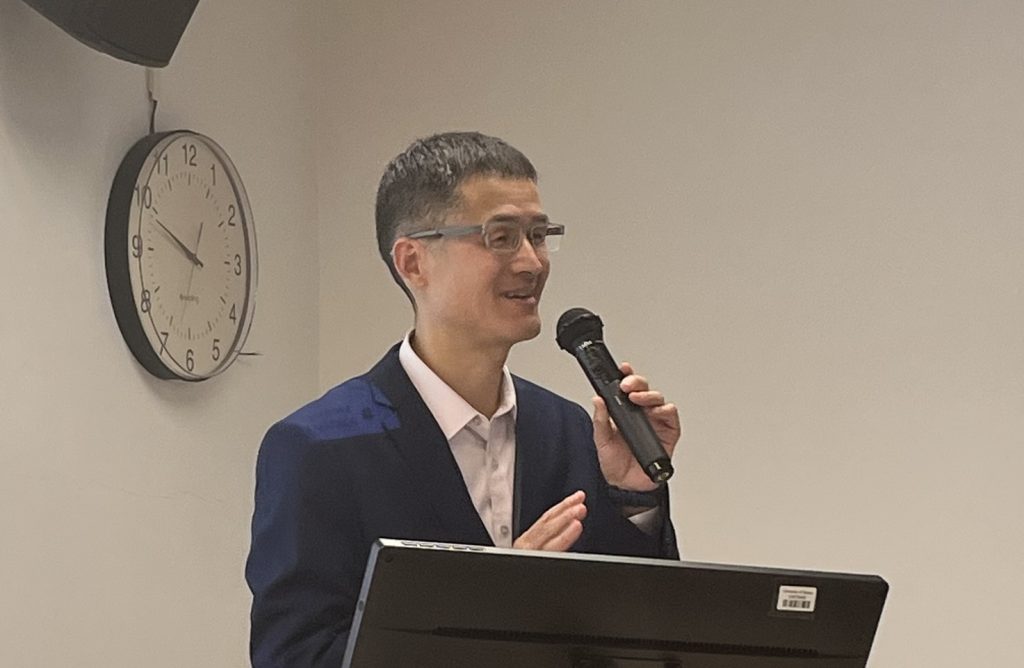
Professor Li Xiaolong is a distinguished scholar at Beijing Normal University and a recipient of the Ministry of Education’s Young Talent Award. He is also a question-setting expert for the renowned television program Chinese Poetry Conference. His accolades include the Beijing Excellent Doctoral Dissertation Award, a nomination for the National Excellent Doctoral Dissertation Award, the Third Prize of the National Award for Outstanding Achievements in Social Sciences in Higher Education Institutions, a nomination for the Hu Sheng Youth Academic Award, a nomination for the Feng Qiyong Academic Award in Redology, the Second Prize of the National Teaching Achievement Award, and the First Prize of the Beijing Higher Education Teaching Achievement Award. He has been recognized as one of Beijing Normal University’s Top Ten Most Popular Professors among undergraduates, serves as the leader of an Outstanding Undergraduate Education Team in Beijing, and has been honored as a Distinguished Young Educator in the city. Professor Li has led various national and municipal-level social science research projects, published over twenty monographs and critical editions of classical texts, and authored more than 130 academic papers.
During the lecture, Professor Li provided a detailed and thought-provoking analysis of the textual relationship among Records of the Grand Historian (Shiji)’s “Biography of Jing Ke,” Strategies of the Warring States (Zhanguoce)’s “Yan Strategies,” and the work Yandanzi. Beginning with the literary classification of Yandanzi as a novel, Professor Li introduced his research motivations and contextualized the discussion within the broader narrative of “Jing Ke’s assassination attempt on the King of Qin.” He explored the evolution of this historical story across textual traditions, examining the source relationships and transmission complexities between Shiji and Zhanguoce.
Through close textual reading, Professor Li analyzed the nuances of character appellations, classical commentaries, and linguistic details to delineate the similarities and divergences between Yandanzi and Shiji, arguing that Yandanzi was most likely composed between the Qin and Han dynasties. He further investigated the distinctions in naming conventions between works titled with “zi” (子) and those with “zhuan” (傳), offering a compelling and accessible explanation supported by wide-ranging textual and historical evidence.
Professor Li emphasized that Yandanzi, as a representative fictional account of the “Jing Ke assassinating the King of Qin” narrative, differs significantly from the historiographical perspective of Shiji. It instead embodies a vivid folk narrative viewpoint. The novel employs an uninhibited naming strategy to convey strong subjective emotions, reflecting the intense sentiment of revenge against Qin held by the people of Yan during the Qin-Han transition. Professor Li’s research, characterized by broad vision and interdisciplinary insight, including East-West cultural comparisons, offered rich content and profound analysis. The lecture illuminated the different modes of writing the Jing Ke story in both historical and fictional texts, revealing the profound historical and cultural connotations embedded in the narratives. By meticulously uncovering textual traces, the lecture showcased the complex development and multifaceted representations of the Jing Ke story across various historical periods and literary genres.
After the lecture, Professor Li patiently answered questions from the audience. The event was met with enthusiastic response and concluded in a warm and collegial atmosphere of academic exchange.